

Publishing a project
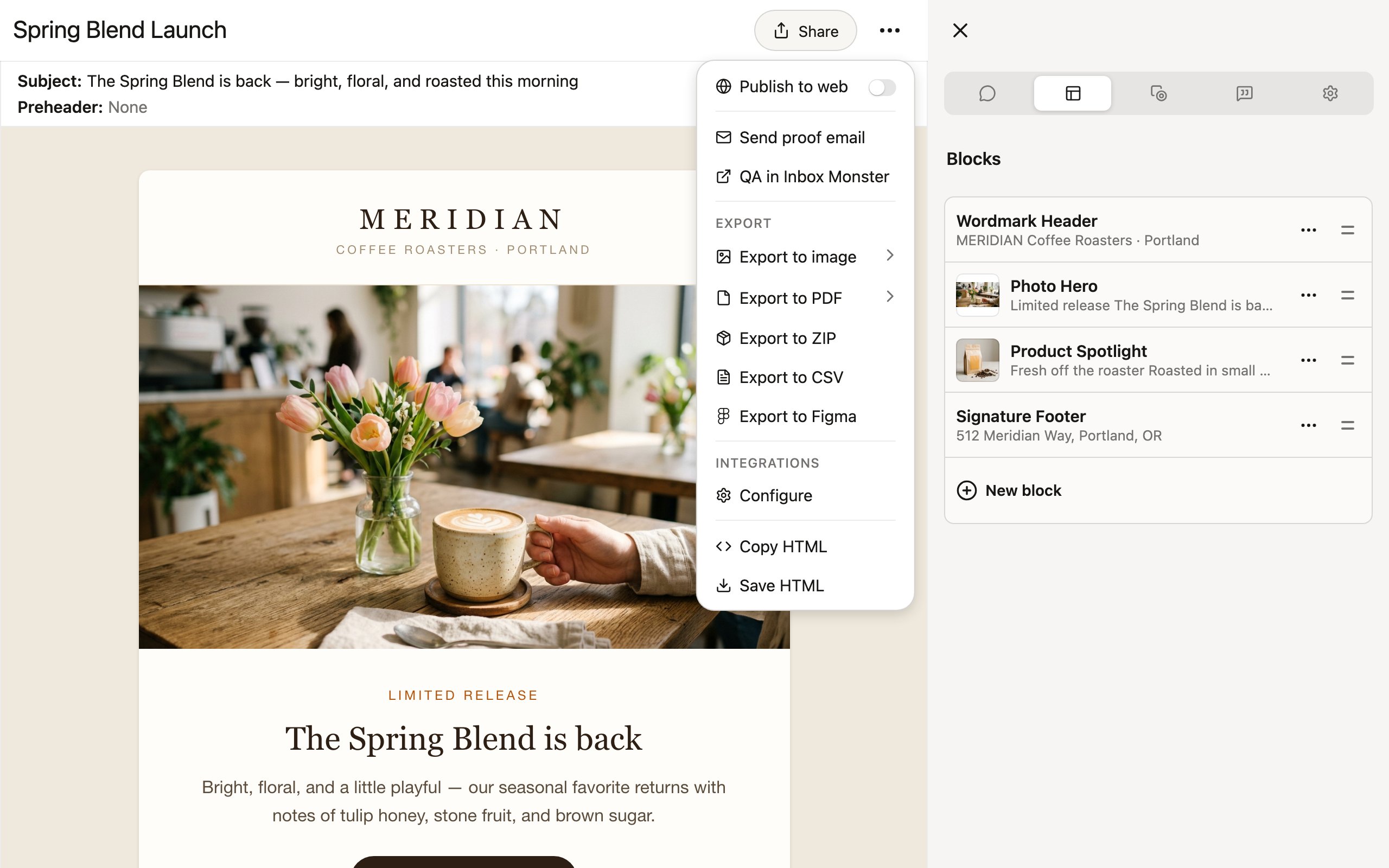
- Open your project and click Share in the toolbar.
- Toggle on Publish to web.
- Two options appear below the toggle: View on web opens the published page in a new tab, and Copy link copies the public URL to your clipboard.
What viewers see
Visitors to a published page see a read-only, fully rendered version of your project, with the project’s name in the header. Email projects show the subject line and preheader above the rendered email. Viewers don’t need to log in, and they can’t edit anything or see the rest of your workspace.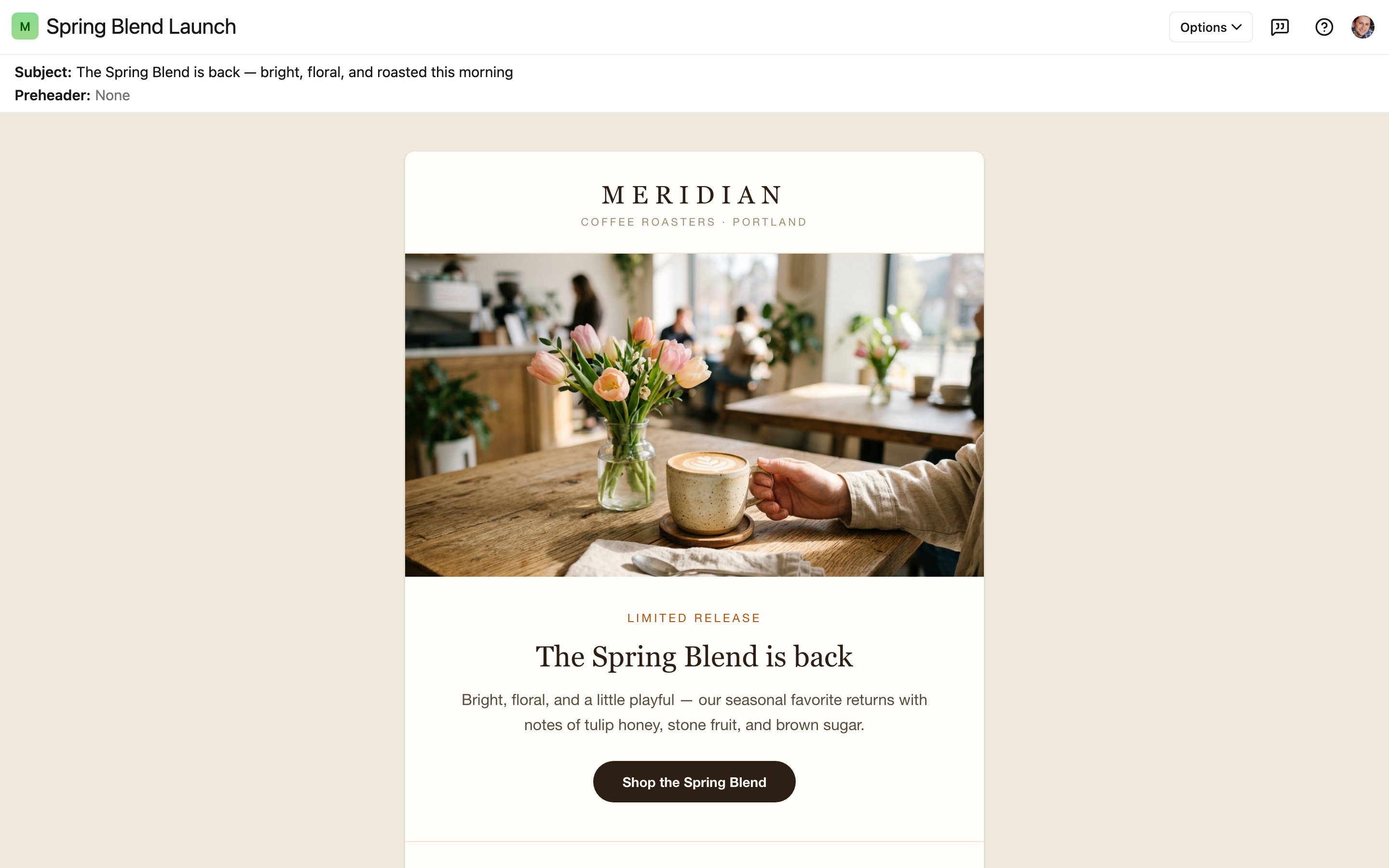
Reviewing variations
If your project has variations, the published page includes an Options menu listing Main along with each variation by name. Reviewers can flip between them to compare — a lightweight way to collect feedback on an entire campaign from a single link.Checking layouts and the fold
The Options menu also offers Copy HTML, plus the same preview tools as the editor: a Preview layout picker for checking the project at desktop, tablet, and mobile widths (Cmd+Shift+F cycles them), a Color scheme picker, and the Above the fold toggle (Ctrl+F). For email projects, the fold guides include markers showing where popular clients would truncate the subject line and preheader — useful when reviewers want to sanity-check copy length without any extra tools.Public comments
Viewers can leave comments directly on the published page. These comments are public — they’re visible to other viewers of the page and to your whole team inside the editor’s comments sidebar, where you can reply and resolve them. Just like in the editor, comments can be attached to a specific block by clicking it, and for email projects, clicking the subject and preheader header attaches feedback to the Subject & preheader. See comments and collaboration.Comments on published pages are available on the Team plan.
Viewing on your custom domain
If your team has an active custom domain, the Share menu gains a section headed by your domain with two extra items:- View on custom domain — opens the published project on your own domain.
- Copy custom domain link — copies the custom domain URL.
Sharing folders
You can publish an entire folder of projects with one link — handy for sending a whole campaign to a reviewer at once.- Click the share button on the folder’s row.
- Toggle on Publish to web.
- Use View on web or Copy link to grab the public URL.
Sharing canvases
Canvases publish the same way: click Share on the canvas, toggle on Publish to web, then Copy link. Viewers get a read-only view of the canvas layout. As with folders, the projects on a canvas must themselves be published for visitors to see them. If a published canvas contains unpublished projects, the canvas editor shows a warning with a one-click Publish all projects action.Best practices
- Use published links for review cycles. They’re the fastest way to get external feedback without onboarding reviewers into Denada.
- Publish folders for campaigns. One link for an entire campaign is easier to manage than individual project links.
- Check comments regularly. Reviewer comments appear in the editor as soon as they’re posted.
- Unpublish when done. Toggle off Publish to web after the review cycle to keep your work private.